


Chapter 231
Ten days have passed since the Kumamoto earthquake. Since the Great East Japan Earthquake of 2011, which originated off the Sanriku coast of the Tohoku region, Japan has experienced six major earthquakes registering Seismic Intensity 7 or higher. Remarkably, half of them—two in 2016 and the latest one—occurred in Kumamoto.The frequent major earthquakes in Kumamoto are inland crustal earthquakes caused by movements along the Hinagu Fault Zone. Extending from this fault is Japan's longest active fault system, the Median Tectonic Line, which stretches from Oita through Shikoku to the Kinki region. Because Naruto City in Tokushima Prefecture lies directly on this fault system, the Kumamoto earthquake cannot be dismissed as someone else's problem.
Apart from the Kumamoto earthquakes, the other earthquakes reaching Seismic Intensity 7 or higher were the 2011 Great East Japan Earthquake, the 2018 Hokkaido Eastern Iburi Earthquake, and the 2024 Noto Peninsula Earthquake in Ishikawa Prefecture. In other words, the entire country—from Hokkaido to Kyushu—is exposed to the risk of devastating earthquakes.
The greatest concern is when the long-feared Nankai Trough Megaquake, expected to originate along the Nankai Trough extending from Suruga Bay in Shizuoka Prefecture to offshore Hyuga-nada in Kyushu, will occur. Trench-type earthquakes occur when an oceanic plate subducts beneath a continental plate and then rebounds, generating massive earthquakes and tsunamis. As demonstrated by the Great East Japan Earthquake, trench-type earthquakes tend to inflict far greater damage because of the accompanying tsunamis.
It is often suggested that inland earthquakes occurring along the Median Tectonic Line, north of the Nankai Trough, may be a precursor to the anticipated Nankai Trough Megaquake. The recent Kumamoto earthquake has also caused severe damage to homes and industrial facilities.
LED manufacturing relies on MOCVD (Metal-Organic Chemical Vapor Deposition) equipment, and production sites typically contain liquid nitrogen tanks as well as storage facilities for cylinders of high-purity ammonia, hydrogen, and other gases. Even if these tanks or storage facilities were to collapse or sustain damage during an earthquake, they are designed and managed to prevent gas leaks. Nevertheless, the Kumamoto earthquake has reminded us that protecting human life must always come first. The highest priority is to evacuate immediately to a safe location.
Under no circumstances should anyone re-enter a damaged building merely to confirm safety conditions or retrieve forgotten belongings. Even if a fire breaks out, evacuation should take precedence unless it can be extinguished immediately with a portable fire extinguisher. There is no need to play the hero; it is perfectly acceptable to be cautious. What matters most is having the courage to escape.
In addition, evacuating during extreme heat or severe cold poses health risks if people must remain outdoors for long periods. Simply having emergency tents available can make an enormous difference. However, if those tents are stored inside a damaged building, retrieving them would itself be dangerous. Therefore, emergency supplies—including tents, emergency food, and drinking water—should be stored in dedicated facilities located outside buildings.
Meanwhile, conflicts continue unabated in Ukraine and around the Strait of Hormuz, depriving countless people of their lives and homes. Even outside war zones, many migrants attempting to flee oppression have lost their lives while trying to swim from Morocco to the Spanish enclave of Ceuta in North Africa. In addition, extreme heat has fueled devastating wildfires across Europe, Canada, and many other parts of the world.
Kumamoto, struck by a major earthquake, presents scenes of destroyed buildings reminiscent of a battlefield. Yet in Tokushima, less than 400 kilometers away in a straight line, daily life continues peacefully without even noticeable tremors. At the same time that the nation is following news of the Kumamoto earthquake, vigorous political debate is taking place over Prime Minister Takaichi's signature proposal to reduce the consumption tax on food products to one percent. How peaceful Japan seems in comparison.
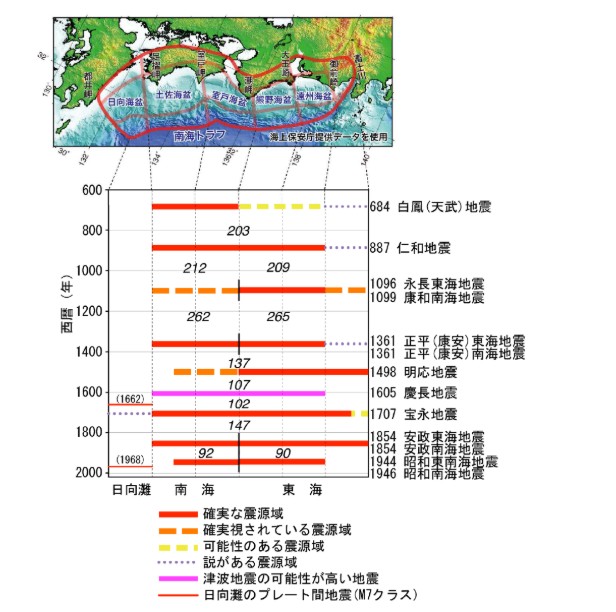
Nankai Trough Earthquake Materials (Excerpt from the JMA Website)
August 7, 2026 (Reiwa 8)
The Irony That the Kumamoto Earthquake Highlights Japan's Peacefulness
