

Chapter 233
Micro LED AR/VR Connect 2026: Where Is the Future of Micro LED Headed?
Micro LED AR/VR Connect 2026, organized by the Micro LED Association, was held in Eindhoven, the Netherlands.In Japan, the term Micro LED is almost becoming a relic of the past. Yet across Asia, Europe, and the United States, companies are still actively pursuing innovation in this field, carefully watching for opportunities that could define the next generation of display technology.
One cannot help but wonder what Japan has lost during its “lost four decades.” In my view, it is not simply technological competitiveness or market share, but something more fundamental: curiosity, intellectual curiosity, the spirit of exploration, and the determination to compete.
Why the Netherlands?
The Netherlands is now home to ASML, the undisputed global leader in extreme ultraviolet (EUV) lithography systems. What I find particularly fascinating is that ASML was not one of the Japanese manufacturers that once dominated the semiconductor lithography industry, nor was it one of the American companies that ultimately helped drive Japanese competitors out of the market.So, why the Netherlands?
When I asked Google AI why ASML succeeded, the answer was fascinating:
“While Japanese manufacturers withdrew from or abandoned EUV development in the face of extraordinary technical challenges and enormous investment risks, ASML established an overwhelming barrier to entry that competitors could not overcome by creating a system that brought together the world’s best technologies, developing a sophisticated approach to sharing risk with customers, and taking advantage of geopolitical opportunities.”
After visiting Eindhoven myself, however, I came away with the strong impression that there was another critical ingredient: the comprehensive support provided by the Dutch government, universities, research institutions, and European companies.
Eindhoven is home to The Strip, a high-tech campus where corporate R&D facilities are concentrated. Companies from around the world and from a wide range of industries—not just semiconductors—have established research operations there, creating an ecosystem where technologies and ideas can cross traditional industry boundaries.
On the wall of a building across the canal, I noticed a simple but powerful message:
“Homebase for breakthrough technology and innovation.”
That phrase perfectly captures what I felt during my visit.
Innovation rarely emerges from people who are constrained by past successes, established assumptions, or conventional wisdom. It comes from new systems, new ideas, and persistent efforts to go beyond what has traditionally been considered possible.
A New Direction for Micro LED
Against this backdrop, I believe Micro LED AR/VR Connect 2026 provided a new sense of direction to an industry that had been somewhat discouraged following Apple’s decision in 2024 not to adopt Micro LED for the Apple Watch.The keynote speakers from Google, Meta, and Microsoft openly addressed the many technical and commercial challenges facing Micro LED. At the same time, they highlighted the advantages that Micro LED can offer over alternative technologies such as OLED and LCOS.
At this level of research, the speakers themselves are extraordinary.
Even the way they structure and deliver their presentations makes you immediately aware that you are listening to people who are far from ordinary. More impressive, however, was the depth of their analysis.
In just 15 minutes, they were able to calmly assess the current state of the technology, identify the critical barriers that must be overcome, and explain where Micro LED could realistically survive and thrive.
The presentations were so dense and insightful that they felt like one-hour lectures. Yet, in reality, only 20 minutes had passed—even including the five-minute Q&A session.
My Favorite Presentations
I had actually been told that I might be asked to step in as a speaker if an unexpected opening became available. Unfortunately—or perhaps fortunately—I had not prepared sufficiently for a presentation at this level.Fortunately, no opening became available, and I was spared the embarrassment!
If I had to choose the best presentation based purely on my own judgment and bias, my number-one choice would be Berthold Hahn, Director at Meta.
Hahn identified red as one of the major technical hurdles facing Micro LED. At the same time, he presented a compelling vision for AR glasses: if Micro LED could achieve a cost of approximately $100 per display unit, it could potentially unlock a $10 billion market by becoming the only display technology capable of outperforming sunlight in this demanding application.
That message, in my opinion, had enormous significance for an industry in need of renewed momentum.
My second choice was Paolo Costa of Microsoft.
Costa pointed out that Micro LED may have applications far beyond AI glasses. In particular, he highlighted the potential of Micro LED for optical communications and data storage, where enormous volumes of data will need to be processed and transmitted in the era of AI.
This was an important reminder that the future of Micro LED may not be limited to displays at all.
Where Is Micro LED Really Headed?
Looking at the overall direction of the conference, I was struck by the difference between the approach presented at Micro LED Connect and the strategies being pursued by companies in China, Taiwan, and elsewhere in Asia.Asian companies are exploring a broad range of potential applications, including large-screen televisions, automotive displays, and other consumer and industrial applications.
By contrast, the message emerging from Micro LED Connect was much more focused:
AI glasses may be the most promising application for Micro LED.
At the same time, the possibility of applying Micro LED technology to optical communications opens up an entirely different avenue for growth.
Perhaps that is the real strength of this industry. Just when one application appears to be losing momentum, researchers and engineers find another path.
The world is full of remarkably intelligent people.
And after attending this conference, I was reminded once again just how many of them are out there.
(And yes, there are a lot of very smart people in this world!)
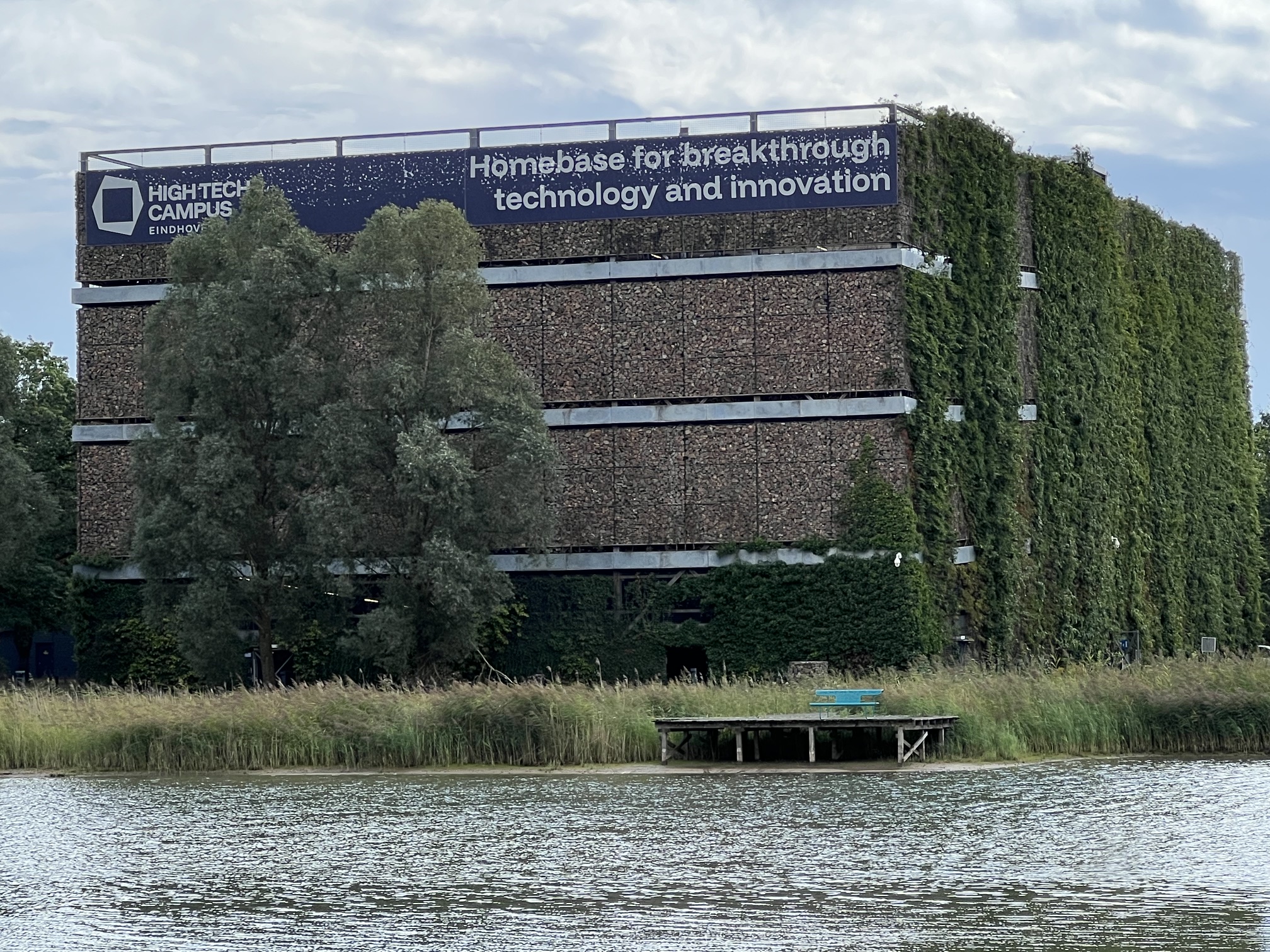
Message on the wall of High Tech campus The strip
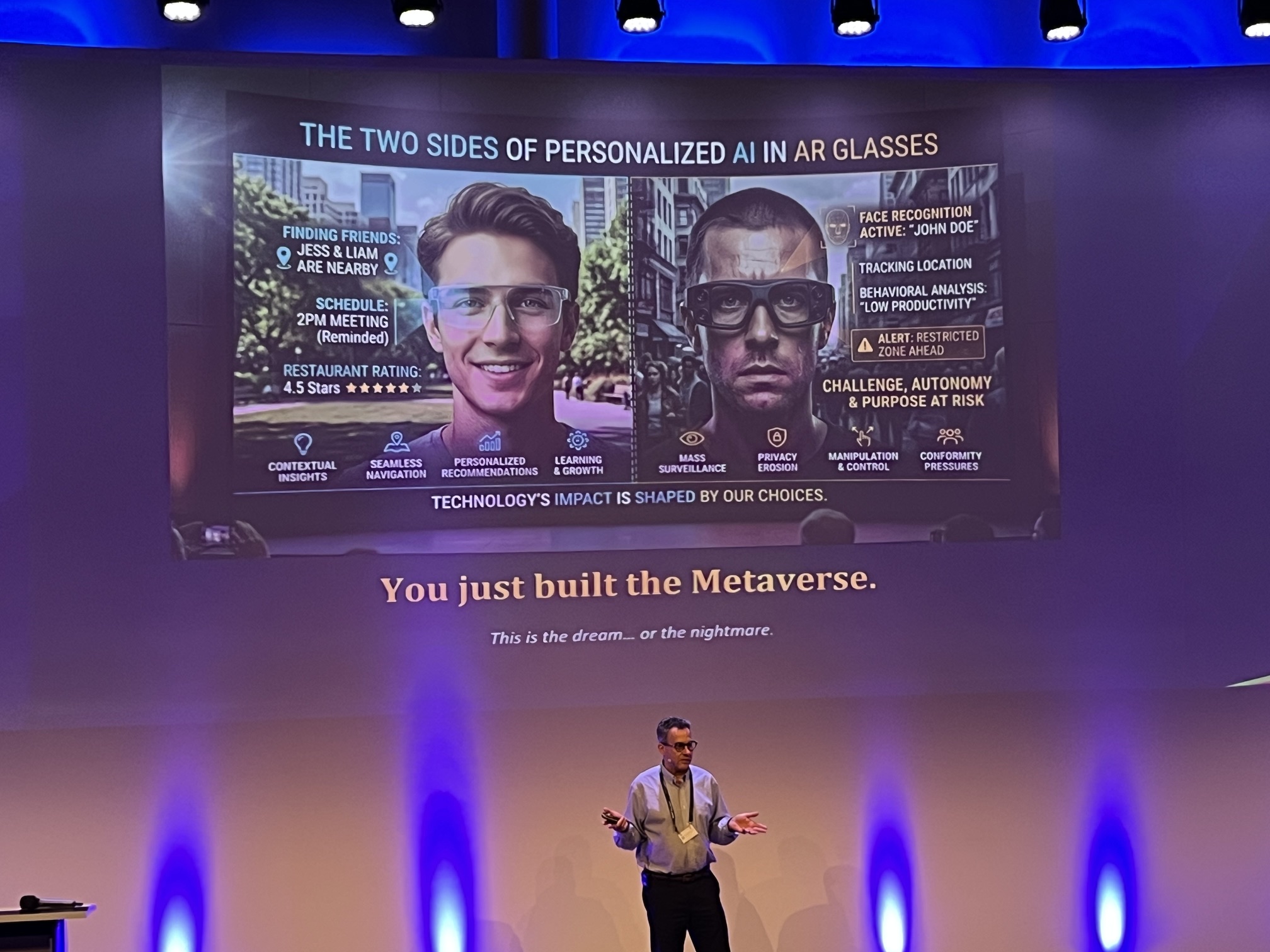
University of Rochester Talk: "AI AR Glasses"
October 6, 2026
Reflections on attending Micro LED AR/VR Connect 2026
